
International Music Competition Judge
50+ Gold Prizes Won by Students
40+ International Teacher Awards
International Interviews (UK)
2025: Global Influential Times &
World Org. for Art & Design
2024: Beeffie Artist Award Org.
Discover what international winners say about learning under Ms. Jin Loh (watch video 2.5 mins)

The Guzheng:
From Ancient China to the Modern World
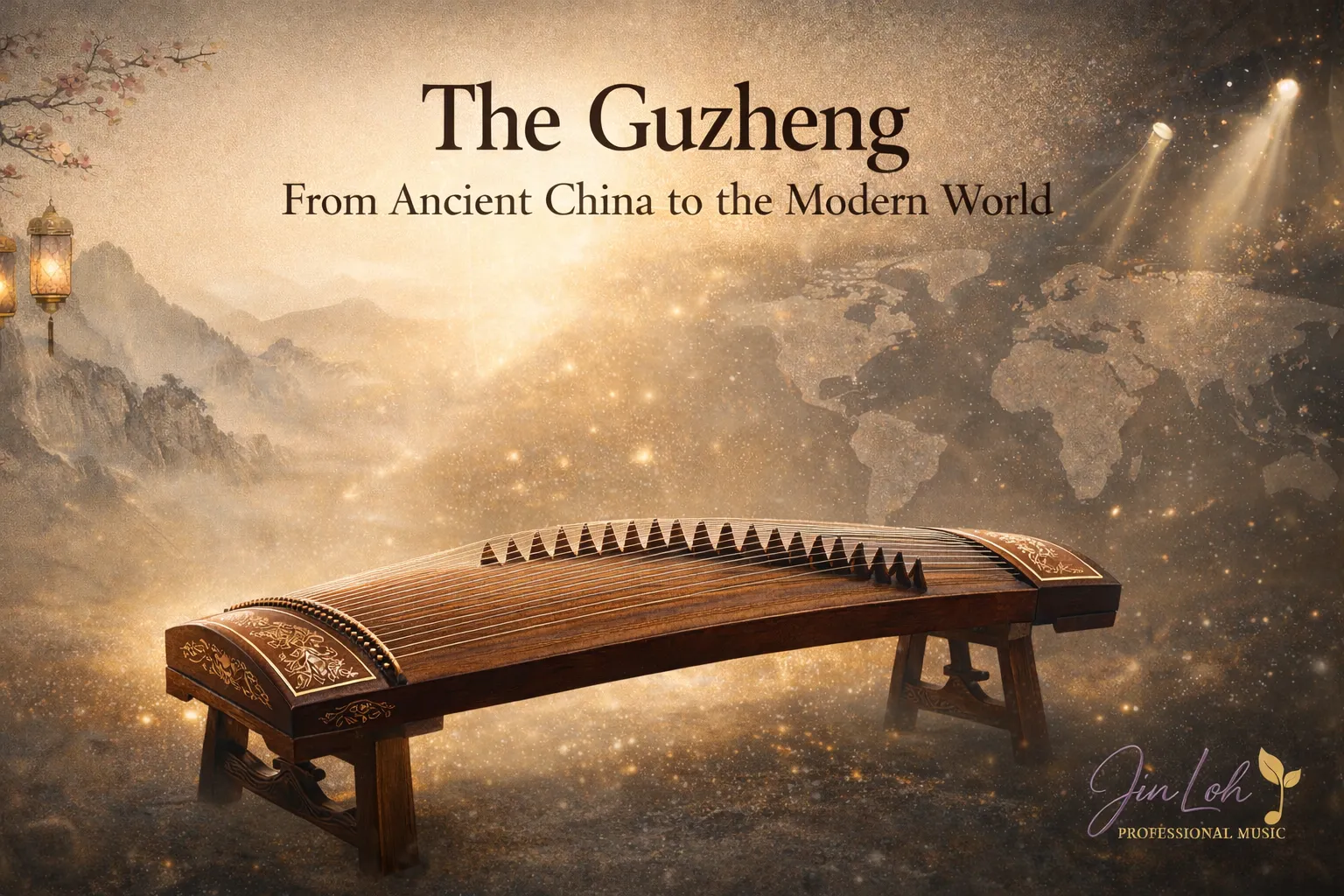
The guzheng 古筝, also known as the Chinese zither, is one of the oldest and most treasured traditional instruments in Chinese music. With a history of more than 2,000 years, it has evolved through different dynasties, musical settings, and performance practices, while continuing to hold an important place in modern musical life.
This article offers a brief introduction to the history and development of the guzheng, based on Ms Jin Loh’s study of the instrument and learning with Chinese guzheng professors.
What is the Guzheng?
The guzheng, also known as the Chinese Zither, is a traditional Chinese plucked string instrument belonging to the zither family.
It is also historically known as the Han Zheng 汉筝 or Qin zheng 秦筝, reflecting its long cultural roots within the Han Chinese musical tradition. As one of the oldest Chinese musical instruments, the guzheng has been widely played across many regions of China for centuries.
Over time, different regional playing traditions developed, giving rise to several distinctive performance styles. Among the most recognised are the Hakka guzheng style 客家筝, Chaozhou guzheng style 潮州筝, Shandong guzheng style 山东筝 and Henan guzheng style 河南筝 , each reflecting the musical character and cultural background of its region.
Early Origins of the Zheng
The zheng 筝 , now more commonly known as the guzheng 古筝, is a traditional Chinese instrument with a history of more than 2,000 years. One of its earliest written references appears in the Records of the Grand Historian (史记 Shiji), compiled around 100 B.C. According to historical research, the earliest form of the zheng had only five strings, and its body was made of bamboo.
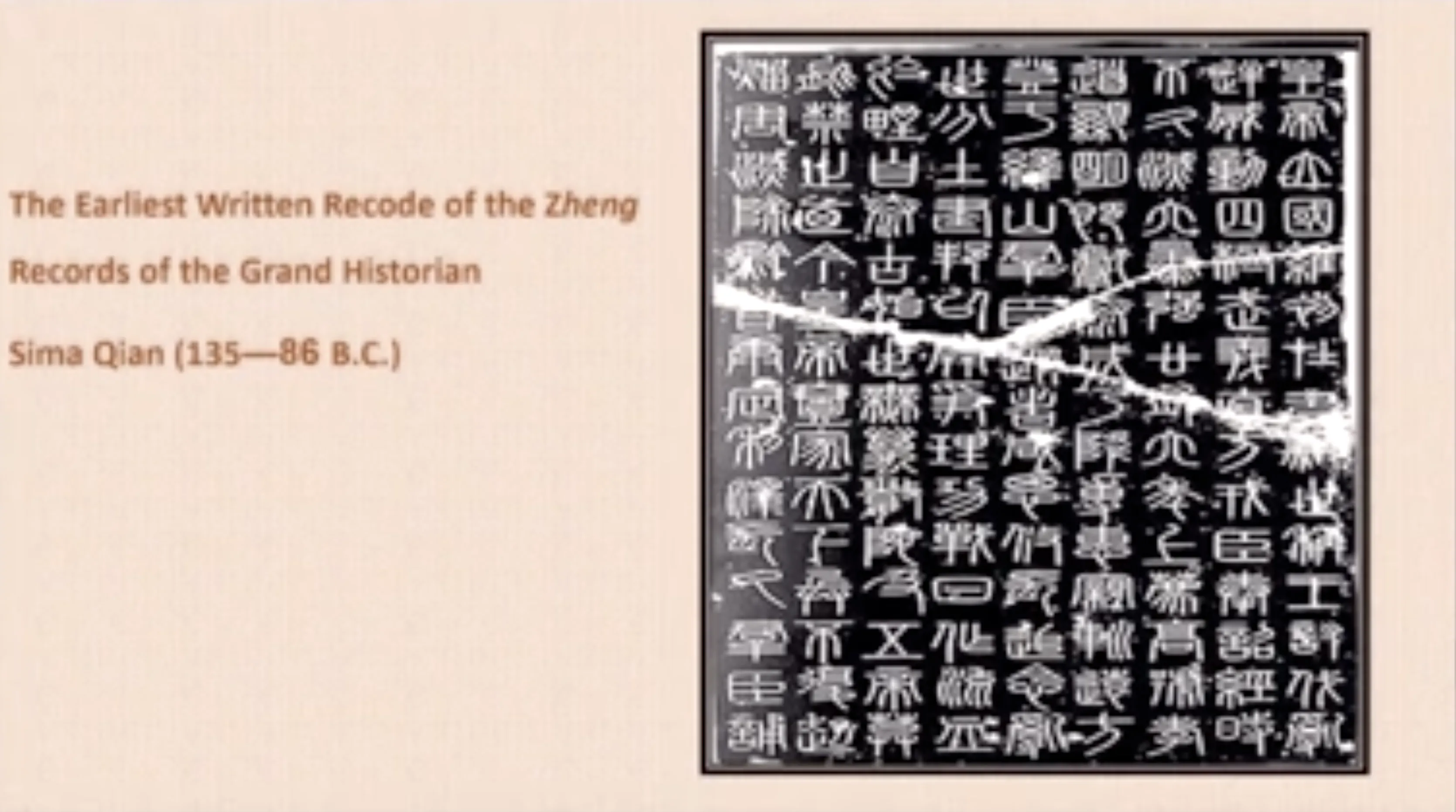 Earliest written reference to the zheng recorded in the Records of the Grand Historian (Shiji) compiled by Sima Qian (135–86 B.C.)
Development Through Chinese Dynasties
As the instrument developed over time, especially through the dynastic periods of Chinese history, both its structure and musical role gradually expanded. By the Tang dynasty, around the 7th century, the zheng had become widely used in both court and folk music. During this period and the centuries that followed, more strings were added, and the instrument developed into 12-string and later 13-string forms.
The 13-String Zheng as a Standard Form
By the early 20th century, the 13-string zheng had become a widely recognised standard form. Throughout history, the zheng was used in a variety of musical settings. It appeared as a solo instrument, as part of ensembles, and also as an accompaniment for singing. In some traditional performance practices, singers played the zheng while accompanying their own voices. These diverse uses are recorded in historical literature and reflect the instrument’s rich artistic life across different periods.
How Many Strings Does the Guzheng Have?
Although deeply rooted in history, the zheng 筝 is also a living modern instrument. Today, the most common standard guzheng has 21 strings. It is typically tuned to a pentatonic system, with five notes in each octave, and usually spans four octaves. This modern form allows for a wider expressive range and has helped the instrument remain highly relevant in both traditional and contemporary music.
The Guzheng in the World Today
Today, the guzheng 古筝 is one of the most popular traditional instruments in China, with a very large playing population numbering well into the millions. In recent years, through growing cultural exchange, the guzheng has also attracted increasing interest from audiences and learners around the world. As both an ancient and evolving instrument, it continues to carry the beauty of Chinese musical heritage into the present day.
Learning the Guzheng Today
For those drawn to the expressive world of the guzheng, online guzheng lessons are guided by International Award-Winning Music Educator Ms Jin Loh.
Her teaching approach brings together traditional musical knowledge, refined artistic guidance, and insights gained through continued study with Chinese guzheng professors.
 Music Education is not about training musicians, but about cultivating human beings - Sukhomlinsky


Home About Ms Jin Loh Contact Us Privacy Policy
By Jin Loh Professional Music (since 1999).
Copyright © 2013-2026 JinLoh-Professional-Music.Com.
All Rights Reserved